Blog · The Philosopher Test
Marcus Aurelius Personality Type: What the Meditations Actually Reveal
· by Jonathan Mendola
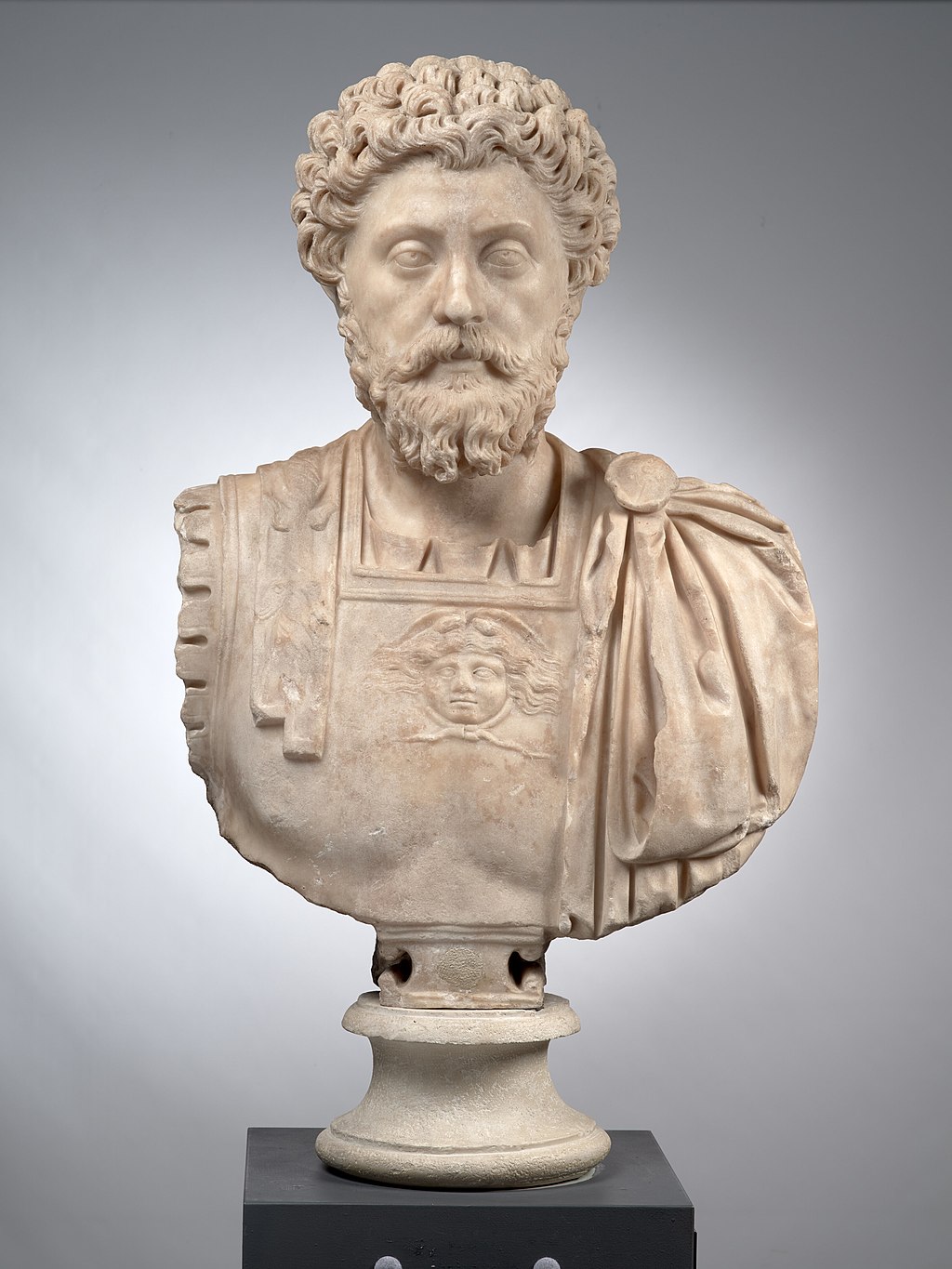
Ask the internet what Marcus Aurelius's personality type was and you get a letter code. INFJ, usually. Sometimes INTJ. A number for the Enneagram, a four-letter label, and that's the end of it.
It's a strange way to answer the question, because Marcus Aurelius is one of the very few historical figures who left us something better than a biography: a private journal he never intended anyone to read. The Meditations were notes to himself, written at night in military camps, with no audience to impress. If you want to know what someone was actually like, that's the document you want.
So here is the short answer, and then the longer one that actually holds up.
The short answer: INFJ, and why that's not enough
The consensus across typology databases puts Marcus Aurelius at INFJ — introverted, intuitive, feeling, judging — often paired with Enneagram type 1, the Reformer. The reasoning is reasonable enough: he was reflective rather than sociable, driven by principle rather than pleasure, and preoccupied with duty to the point of self-reproach.
But there's a problem with typing a man who died in 180 AD. MBTI was designed as a self-report instrument. Nobody administered it to Marcus Aurelius. Every letter assigned to him is an inference drawn by a stranger from a text written eighteen centuries ago — and most of those inferences rest on the same handful of famous quotes, recycled across sites that never cite a passage.
There's a better method available, and it costs nothing: read what he actually wrote about himself.
What his own words reveal, trait by trait
Discipline: the dominant trait, and he had to fight for it
The most repeated theme in the Meditations is not wisdom or virtue. It's getting out of bed.
He argues with himself about it — at length, more than once. A man who had absolute power over the Roman Empire spent his private pages talking himself into starting the day. That detail matters more than any letter code: it tells you his discipline was not natural. It was constructed, daily, against resistance.
Waste no more time arguing what a good man should be. Be one.
That's not the sentence of someone to whom virtue comes easily. It's the sentence of someone who catches himself theorising instead of acting, and says so.
Serenity: the goal, not the starting point
Marcus Aurelius is remembered as the calm emperor. The journal shows the machinery underneath that calm — and it's effortful.
You have power over your mind — not outside events. Realize this, and you will find strength.
He repeats variations of this idea dozens of times. People do not repeat what they have already mastered. He was reminding himself, over and over, because the reminder kept being necessary: plague, war on the Danube, the death of most of his children, a rebellion led by a trusted general. His serenity was a practice, not a temperament.
Empathy: unusually high, for an emperor
One of the most distinctive things about the Meditations is how he prepares for other people's failures.
He tells himself each morning that he will meet the ungrateful, the arrogant and the dishonest — and that they act that way from ignorance of what is good, not from malice. It's a remarkable posture for someone with the legal power to have any of them killed. He chooses to understand them instead.
The best revenge is not to be like your enemy.
Resistance and ambition: much lower than you'd expect
Here's where the standard typology misses something. Marcus Aurelius held the most powerful office in the world and shows almost no appetite for it. He didn't seek the throne; he inherited it through adoption, and the journal reads like a man performing a duty he never asked for.
He's equally uninterested in defiance for its own sake. Where Diogenes mocked convention and Nietzsche attacked it, Marcus worked inside the system he was handed and tried to be less bad at it each day. Low ambition, low resistance, extremely high discipline — that combination is rare, and it's the real signature of his personality.
The six-trait profile
- Serenity95
The organising goal of his entire practice
- Discipline92
Not innate, deliberately built
- Resistance82
He refuses corruption, not convention
- Empathy68
Systematic, almost procedural compassion
- Curiosity60
Reflective, but not chasing new ideas
- Ambition50
The most powerful man alive, writing about how little power matters
Letter codes flatten people into boxes. A more useful approach is to score the traits independently and look at the shape they make together.
On the six-trait model we use — discipline, curiosity, resistance, empathy, ambition, serenity — Marcus Aurelius comes out roughly like this:
- Serenity: very high. The organising goal of his entire practice.
- Discipline: very high. Not innate, deliberately built.
- Resistance: high but quiet. He refuses corruption, not convention.
- Empathy: above average. Systematic, almost procedural compassion.
- Curiosity: moderate. He reads and reflects, but he isn't chasing new ideas the way Socrates was.
- Ambition: low. The most powerful man alive, writing about how little power matters.
That profile is what makes him distinct. Plenty of people score high on discipline. What's rare is high discipline paired with low ambition — the willingness to work relentlessly at something you don't particularly want for yourself.
For the exact mirror image of this profile — near-zero serenity paired with maximum ambition — see the Nietzsche personality type.
Would your chart look like his?
The honest answer to "what personality type was Marcus Aurelius" is that no four letters can carry it. What you can do is compare the shape of his traits to the shape of yours.
That's what The Philosopher Test measures: twenty questions, six traits, and a match with one of eight great minds — Marcus Aurelius among them. It takes about three minutes and gives you your full chart, free, with no signup. If you want the longer profile first — his five defining signs, his best quotes and where to start reading him — the Marcus Aurelius personality profile covers all of it. And if you'd rather see how he compares with the other seven, the full list of philosopher profiles is here.
About the author
Jonathan Mendola built The Philosopher Test — a six-trait model calibrated on 10,000 simulated respondents, matching people with eight philosophers. He is not an academic philosopher; he is a builder who got obsessed with the question of how differently people can be serious about the same life.